


A banker by day and an avid gourmand after work hours, keeping tabs on the expenses was hard – or rather, a chore that I would not dare take on.
Reality hits hard when I had to pay for my personal accident bills without insurance, lose my money on an investment that was advised by a friend, and not having enough savings to tide through an emergency.
My early 20s was a mess – and I don’t want you to repeat that, so here are some finance lessons to guide you in your financial journey.
1. Set Financial Goals
For several years, my financial goal was to spend as much as I want and still have some money to cover rent.
Not spending was challenging until a fracture from barre class warrant a wake-up call to set goals and plan for them. It was an expensive lesson, especially when the bill came up to $7,000 and it took me a year to fully recover.

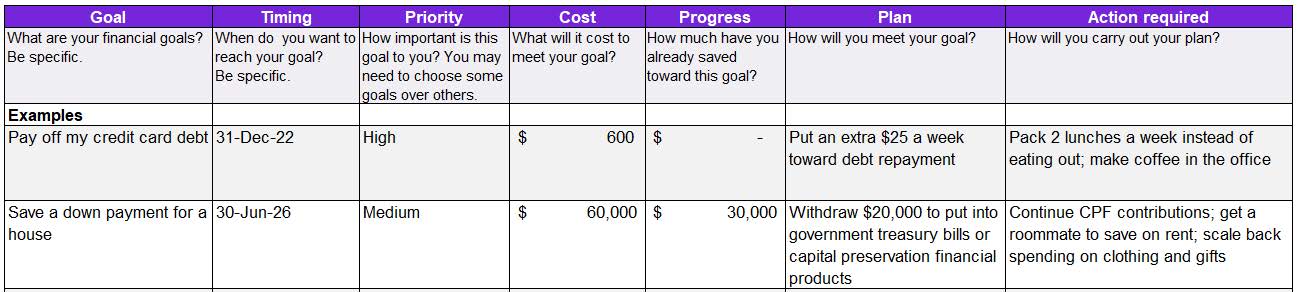
In the process of setting my goals, I realized that reality setting is an important driver to achieving them. For instance, I want to buy a house to host dinners for my family and friends.
Instead of merely setting numbers on an excel spreadsheet, I aligned my financial goals with what gives me joy before translating them into actionable items.
2. Budget and Prioritize Your Spending
After the accident, I became more intentional in saving money. I opened another account (not linked to my card) and set up a standing order.
When my salary arrives, I would save a percentage of my income before setting aside money for my wants and needs.
I identify my spending categories and prioritize them according to my lifestyle. Thereafter, I separate them into fixed and variable costs and list the variable costs according to the most important to the least important.
The DBS NAV Planner is a good financial tool that automatically categorizes my expenditure in real-time and helps me to navigate my financial goals. I also keep track of my expenses in this excel template.

3. Grow Your Money Wisely
Once I have my budget system in place, I began to read books such as “A Random Walk Down Wall Street” and blogs like “Re-Think Wealth” to increase my financial knowledge.
I have two types of “investments”, one for capital preservation, and the other for wealth accumulation.
When I couldn’t find a more attractive capital preservation financial instrument, I would top up my CPF and SRS accounts. Otherwise, I’d place my funds in SG Bonds, Structured Deposits, etc.
I also made sure that I knew my financial risk profile well and chose the investments accordingly and wisely.
Only when I had surpluses, did I start investing in Regular Saving Plans (RSPs), a mixture of Exchange Traded Funds (ETFs) and mutual funds. Hassle-free and easy, most RSPs start from $100/month. You can get them on POEMS, Fund Supermart or DBS.
Thereafter, I moved on to higher risk investments such as stocks and shares, set timers and track them on my watchlist on Bloomberg.
4. Search For Money Hacks
With the limited budget I have each month, I started to search for cards and places that can give me the most air miles rate, shopping, and dining deals.
SG Budget Babes telegram is the best gateway to the most updated shopping deals in town.
Klook is the companion for your travel, dining, and event needs.
Milelion is my go-to place to get hacks and tips to earn and maximize credit card rewards. This is where I learn how to get my annual or bi-annual free trips.

I’ve had the best experience with ShopeePay and the daily vouchers that they extend for food purchases. With cashbacks, vouchers and points earned from my shopping, I can enjoy a 25 cents coffee or a 30 cents cup of bubble tea.

5. Make Mistakes and Learn From It
After making several financial mistakes during my early 20s, these are 3 simple guides that you can stick to:
a. Take charge of your financial decisions
Ask for advice from the right people and do your research on everything.
In a bid to gain financial freedom, I took my friend’s investment advice to purchase a mutual fund with my savings. Having been in the industry for some time, I trusted his recommendation without researching. Unfortunately, the price of the fund plummeted by half overnight and it took me several months before I could recoup the sum.
b. Don’t compare and be #FOMO
Stick to what you can afford and know that you are not losing out by not owning that ‘it bag’ or that limited-edition sneakers.
Consider the opportunity costs and other potential investments you can make. Identify if that thing is a want or a need and what will you have to sacrifice?
After all, delayed gratification, time in the market, and being patient can help to reward you further in the long term.
c. Always read the fine lines
There’s a reason why terms and clauses are written in fine print.
When buying an endowment plan, take note of clauses such as the surrender value, guaranteed value, and projected investment returns. For investments, be aware of the fees incurred and your risk profile - make sure that you are not exposed to a higher-risk fund.
Be sure to counter-check information and the nitty-gritty directly with the insurance or investment company.